Institute of Underland
Bride of AlvarThe Institute of Underland is the formal educational institution named in the Earth–Axus marriage agreement as part of Underland’s obligations to Hannah Delaney and her daughter. Its inclusion in the treaty makes education a component of the political settlement: if Hannah and her daughter were brought to Underland, the nation would provide for their material and personal needs, protect them through the Underland Guard, and instruct them through the Institute of Underland in the ways and customs of its people. The institution therefore stands at the intersection of diplomacy, cultural assimilation, and dynastic preparation.
Foundation and Treaty Role
The Institute of Underland is not introduced as an independent political actor, but as a guaranteed institution within the agreement made under oath to Elias, the God of Light, on October 10, 1993, on Earth, and on the twenty-third day of Havath in 2918 on Axus. The agreement between Hannah Delaney and King Alvar of Underland promised that the female child Hannah carried would be betrothed to Alvar as his future wife and queen, securing peace between Earth and the realms of Axus. Once Hannah and her daughter were brought to Underland, the Institute of Underland was to teach them the society’s ways and customs alongside the protection supplied by the Underland Guard.
This wording gives the Institute of Underland a function broader than ordinary schooling. The education promised by the treaty is part of the infrastructure meant to make a cross-world marriage and peace arrangement possible. It is also a mechanism through which a person raised on Earth can be prepared to occupy a position at the center of Underland’s monarchy.
Lucy Hammond’s Instruction
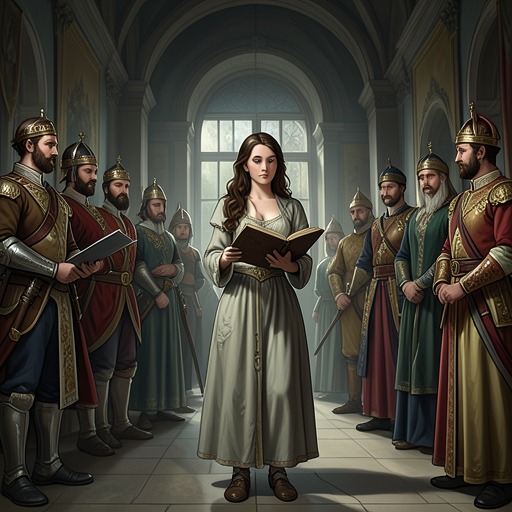
After Lucy Hammond crosses the Bridge and reaches the Underland palace, Fletch explains that Alvar has studied Earth in an effort to make her more comfortable in Underland. Fletch then tells her that her lessons will begin the following day, establishing the Institute of Underland’s educational purpose as an immediate practical necessity rather than a distant treaty provision. Lucy understands the arrangement with dismay as a return to school, but the curriculum is explicitly connected to her expected royal role.
The lessons cover history, customs, languages, and Lucy’s duties as Alvar’s queen. History is meant to give her a framework for understanding Underland and the wider Axus realms; customs and languages address the cultural and communicative barriers created by her arrival from Earth; and instruction in her duties prepares her for the obligations attached to the title promised by the agreement. The curriculum thus combines cultural translation with political training. Lucy is not merely being taught how to live in a new country; she is being prepared to function within a foreign court and to represent the treaty’s intended future.
The setting around this promise emphasizes the scale of the world Lucy is entering. As Fletch leads her through a hall lined with artwork, she sees depictions of winged and feathered peoples, deer-like people, gobli, humans, and mermaid-like peoples. The Institute’s proposed instruction therefore occurs against a visibly plural society whose customs cannot be reduced to those of a single human kingdom. Lucy’s education is presented as necessary because Underland contains multiple peoples, histories, and social practices that she does not yet understand.
Law, Custom, and Royal Legitimacy
The Institute of Underland’s role gains significance from the many systems of custom and authority Lucy encounters. The treaty itself defines a future marriage and queenship, while other practices in the realm include public wedding rites, religious blessing, the Star Wheel execution used by the gobli, and traditions governing succession. Lucy hears that criminals in Goblia may be torn apart limb by limb on a Star Wheel, a punishment whose brutality exposes how different legal and customary systems can be across the realms. Such knowledge is precisely the kind of historical and cultural orientation the Institute is supposed to provide, although the narrative shows Lucy encountering these realities under pressure rather than through orderly instruction.
The contrast between the treaty’s language of protection and the violence embedded in some regional customs also complicates the institution’s educational promise. Underland offers Lucy instruction so that she may become legible within its society, but that society includes practices that frighten and morally unsettle her. Learning the customs of the people is therefore not neutral cultural enrichment: it requires her to distinguish between traditions, political abuses, religious systems, and forms of authority that compete for legitimacy.
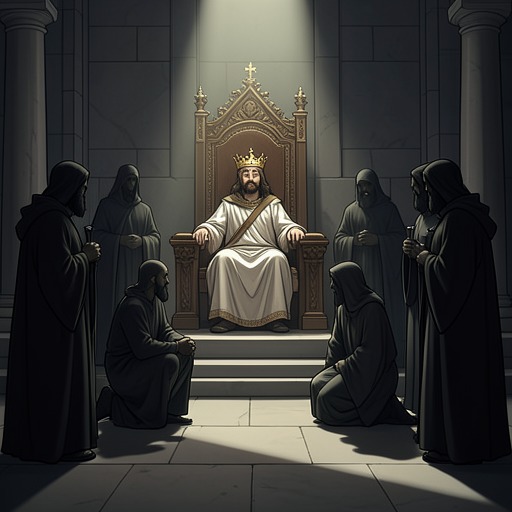
The political stakes of such education become especially clear in the later debate over Alvar’s right to rule. Sola Brightfeather argues that Alvar has ruled for years without abusing his Cursed state and that the council should allow him to resume his duties. She also explains that, by tradition, an heir is judged by the council at the age of twenty-five before succeeding the monarch. These details show a political order in which royal authority is shaped by custom, council judgment, and public confidence. The Institute’s teaching of customs would consequently prepare Lucy not only for ceremonial marriage but also for the institutional expectations surrounding queenship and succession.
Narrative Significance
The Institute of Underland represents the promise that political incorporation can be achieved through knowledge as well as through marriage. The Earth–Axus agreement attempts to bridge two worlds by pairing dynastic betrothal with material care, military protection, and formal instruction. For Lucy Hammond, however, the educational promise arrives amid abduction, forced relocation, fear for Emily Hall, and the abrupt expectation that she will become Alvar’s queen. The institution therefore embodies both accommodation and constraint: it offers the tools required to survive in Underland while confirming that Lucy has been placed inside a role designed before she could choose it.
Its importance also lies in the gap between institutional preparation and lived experience. Lucy is told that lessons in history, customs, languages, and royal duties will begin after she reaches the palace, yet she is already confronted with unfamiliar peoples, dangerous laws, religious ceremony, and the threat posed by Remora and Saul. The Institute of Underland promises an orderly process of cultural translation, while the surrounding plot repeatedly forces Lucy to learn through crisis. That tension makes the institution a quiet but revealing symbol of the book’s larger conflict between negotiated peace and coercive power, between the written assurances of a treaty and the unstable realities of crossing into another world.